Peacekeeper or Peacemaker? The Difference That Matters


The words peacekeeper and peacemaker sound almost interchangeable. In everyday conversation, they’re often used as if they mean the same thing. But when you slow down and look closer, the difference between the two can be profound—sometimes even transformative.

At first glance, both roles seem rooted in harmony. Both suggest someone who values calm, avoids unnecessary conflict, and wants things to run smoothly. Yet the paths they take to achieve that calm couldn’t be more different.

The Role of a Peacekeeper

A peacekeeper is focused on maintaining stability. Their primary goal is to stop conflict from escalating. They smooth over tension, redirect uncomfortable conversations, and often sacrifice their own voice to keep the environment calm. In many situations, peacekeepers are invaluable. They prevent arguments from turning into explosions and help people coexist without constant friction.

But peacekeeping often comes at a cost.

When peace is preserved at all costs, underlying issues remain unresolved. Feelings are buried instead of addressed. Hard conversations are postponed indefinitely. Over time, this kind of “peace” can become fragile—held together by avoidance rather than understanding.

Peacekeepers don’t create conflict, but they don’t always resolve it either.

The Courage of a Peacemaker

A peacemaker, on the other hand, is willing to step into discomfort. Rather than avoiding conflict, they engage it thoughtfully and intentionally. Peacemakers ask hard questions. They listen deeply. They create space for honesty, even when it’s messy.

True peacemaking isn’t about winning arguments or assigning blame. It’s about seeking understanding and restoration. It requires courage, patience, and humility—because facing conflict means accepting that resolution may take time and effort.

Where peacekeeping says, “Let’s just move on,” peacemaking says, “Let’s work through this.”

Why the Difference Matters

In relationships, families, workplaces, and communities, the distinction between peacekeeping and peacemaking shapes long-term outcomes. Peacekeeping may provide short-term calm, but peacemaking builds lasting trust. One avoids tension; the other transforms it.

Choosing to be a peacemaker doesn’t mean rejecting peace—it means redefining it. Real peace isn’t the absence of conflict; it’s the presence of understanding.

A Question Worth Asking

Many of us default to peacekeeping because it feels safer. Conflict can be uncomfortable, emotionally draining, and unpredictable. But growth rarely happens in comfort.

So the question isn’t whether peace matters—it does. The question is what kind of peace are we pursuing?

Are we keeping the peace… or making it?

Hello World!

A Greeting From the Vastness

Every now and then, this simple greeting drifts into my day—quiet, almost weightless, yet grounding in its own way. It’s a reminder that beyond my little corner of existence, there are countless others moving through their own stories, carrying their own hopes, burdens, and wonders.

When I pause long enough to consider the sheer scale of humanity, I’m struck by a kind of gentle awe. Billions of us, scattered across this spinning sphere, each navigating a life that is complex and uniquely our own. We cross paths, collide, drift apart, and sometimes—if we’re blessed with the awareness—find a connection that reshapes us.

There’s something humbling about remembering that I’m just one creature among many. Not insignificant, but part of a larger tapestry that stretches far beyond what I can see. The world is full of people I will never meet, living lives I will never fully understand, yet somehow we’re all bound by the same fundamental rhythms: longing, learning, loving, losing, beginning again.

And in that realization, there’s a quiet beauty. A sense of belonging not because we are the same, but because we are all here—trying, stumbling, growing, becoming.

So when that greeting appears, I take it as a nudge to look up from my own orbit. To remember the vastness. To appreciate the miracle of being one small, conscious spark in a universe full of them.

To be, in the simplest and most profound sense, human.

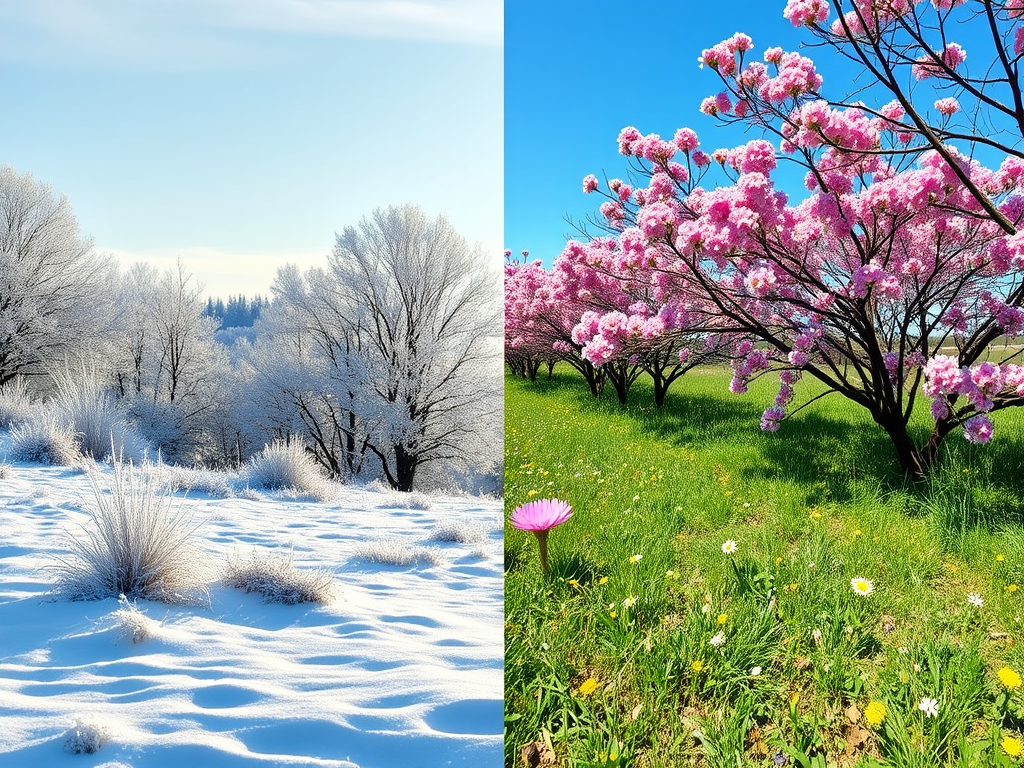
Winter to Spring

Winter to Spring

Embracing the Spiritual Transition from Winter to Spring

As winter settles in, its quiet snowfall blankets the world in stillness. For many, this season brings a sense of introspection—a time when the cold and numbness outside mirrors our own emotional, physical, and mental states. The hush of winter invites us to slow down, reflect, and become attuned to the subtle shifts within ourselves. Our sensitivities to the atmosphere may be dulled or heightened, echoing the climate’s changes and prompting us to examine our spiritual landscape. 

Yet, as the days lengthen and the first signs of spring emerge, a gentle awakening begins. Spring is not just a change in weather; it is a spiritual renewal. The thawing earth, budding trees, and returning birds remind us that transformation is possible. The numbness of winter gives way to the vibrant energy of spring, encouraging us to reconnect with our senses and embrace growth.

This transition is more than physical—it is deeply spiritual. Moving from winter’s introspection to spring’s renewal, we are invited to shed what no longer serves us and welcome new beginnings. The spiritual journey mirrors nature’s cycle: periods of quiet reflection followed by bursts of creativity and hope.

As you witness the shift from winter to spring, consider how your own spirit responds. Allow yourself to honor the lessons of winter’s stillness, then step forward into the promise of spring’s renewal. In this way, the changing seasons become a metaphor for our ongoing spiritual evolution. 

Hearing Accurately

Hearing Accurately: Learning to Listen Beyond Our Filters

Renewing the mind is an ongoing, intentional journey—not a one‑time achievement. As I walk this path, one question continually rises to the surface: Am I hearing accurately? It’s easy to assume that I take in information the way it’s offered, but the truth is more complicated. Every piece of new information is filtered through the perceptions, beliefs, and experiences I’ve carried up to this moment. Recognizing that truth has completely reshaped the way I listen.

The Challenge of Hearing Accurately

We often imagine ourselves as objective receivers of information—like clean slates absorbing whatever is said. But in reality, the mind works more like a lens than a window. Even when someone speaks clearly, what we “hear” internally may be something different. Our brain interprets words through old memories, past hurts, expectations, and even our current mood.

This means hearing accurately isn’t automatic. It’s intentional. It requires examining not only the message but also the internal filters shaping how we perceive that message.

Understanding Personal Filters

Filters aren’t inherently bad—they’re simply the mental frameworks our minds use to understand the world. But if we don’t become aware of them, they can distort what we think we heard.

Filters can include:

  • Past wounds that make us overly sensitive to certain tones or phrases
  • Long‑held beliefs that shape what we expect someone means
  • Prior experiences that make us assume patterns that may no longer apply
  • Emotional states—fatigue, stress, excitement—that can amplify or mute meaning

Recognizing these filters doesn’t mean judging ourselves. It means acknowledging that our minds are complex and that growth requires awareness.

Practicing Self‑Reflection

One of the most transformative steps in renewing my mind has been pausing long enough to ask reflective questions:

  • “Is what I’m hearing actually what was said?”
  • “Could I be reacting from an old wound or assumption?”
  • “How else could this be interpreted?”

These questions help interrupt automatic reactions. They create space for clarity. Over time, I’ve learned that what I assumed someone meant often wasn’t their intention at all. A moment of reflection can prevent a misunderstanding, a conflict, or unnecessary internal turmoil.

Renewing the Mind Through Intentional Listening

Renewal isn’t just about replacing old thoughts with new ones—it’s also about reshaping how we receive information in the first place. Intentional listening plays a major role.

Here are a few practices that have helped:

  • Slow down before responding. Let the message settle instead of reacting instantly.
  • Seek understanding. Asking clarifying questions isn’t a weakness—it’s wisdom.
  • Challenge assumptions. Just because a thought arises doesn’t mean it’s accurate.
  • Invite perspective. Sometimes hearing how others interpret the same message reveals what we overlooked.

This kind of listening fosters healthier relationships, deepens spiritual awareness, and opens the door to transformation.

Moving Toward Greater Clarity

Growth doesn’t happen overnight. Learning to hear accurately is a gradual process that requires patience, humility, and grace—both for ourselves and for others. Each step toward clearer listening strengthens our ability to think clearly, love deeply, and respond wisely.

Conclusion

Hearing accurately is a vital part of renewing the mind. It invites us to look inward with honesty and courage, recognizing the filters that shape our understanding. As we grow more aware, we become better listeners, better communicators, and better versions of ourselves.

The next time something stirs you—positively or negatively—pause and ask:
Is this the message as it was given, or the message as I perceived it through my filters?

That simple question can open the door to transformation.


Photo by Julia Volk on Pexels.com

From Soil to Sun

It sometimes seems hard to sense the growth taking place within me. I understand with my intellect the concept of seed time and harvest, yet actualizing this can leave me with conflicting emotions.

I once read a book about the progression of a seed from the initial planting to the manifestation of its respective fruit. Seeds of change are often hard to germinate. Having the right soil, fertilizer, and water are crucial factors in achieving the desired outcome. The external environment and climate also come into play.

As I reflect on this metaphor, I realize how closely it mirrors the inner landscape of personal growth and transformation. Just as a gardener must patiently tend to their seedlings, I must nurture the seeds of change within myself. This nurturing involves a mix of self-awareness, consistent effort, and, perhaps most challenging of all, patience.

In the garden of my soul, the “right soil” might represent a positive mindset and supportive relationships—those elements that provide a stable foundation for growth. The “fertilizer” is the knowledge and experiences that enrich my understanding, while “water” symbolizes the care and attention needed to sustain my energy and motivation.

However, even with all these factors in place, progress can feel maddeningly slow. Just as we may stare at the soil, willing the seed to sprout, I sometimes find myself questioning whether any growth is happening at all. In these moments of doubt, it’s helpful to remember that much of the work occurs beneath the surface where it is invisible. Roots are forming, and these unseen developments are crucial for the eventual emergence of new life.

Moreover, the external climate—the challenges and opportunities presented by my environment—plays a significant role. Adverse conditions can test my resilience, much like a cold snap tests a budding plant. Yet, these challenges also serve to strengthen me. They remind me that growth is not just about flourishing in perfect conditions; it’s about adapting and evolving in the face of adversity.

As I continue this journey, I find solace in the cyclical nature of growth. Just as seasons change, so do the stages of development within me. There are times for planting, nurturing, and harvesting, but also times for rest and reflection. Embracing this natural ebb and flow allows me to navigate conflicting emotions with greater ease.

Ultimately, sensing growth within myself requires a blend of patience, trust, and a willingness to embrace the journey—a journey where each step forward, no matter how small, contributes to the larger tapestry of my life. Every seed planted, nurtured, and eventually harvested, tells a unique story of change and transformation, reminding me that growth, though sometimes imperceptible, is always unfolding.